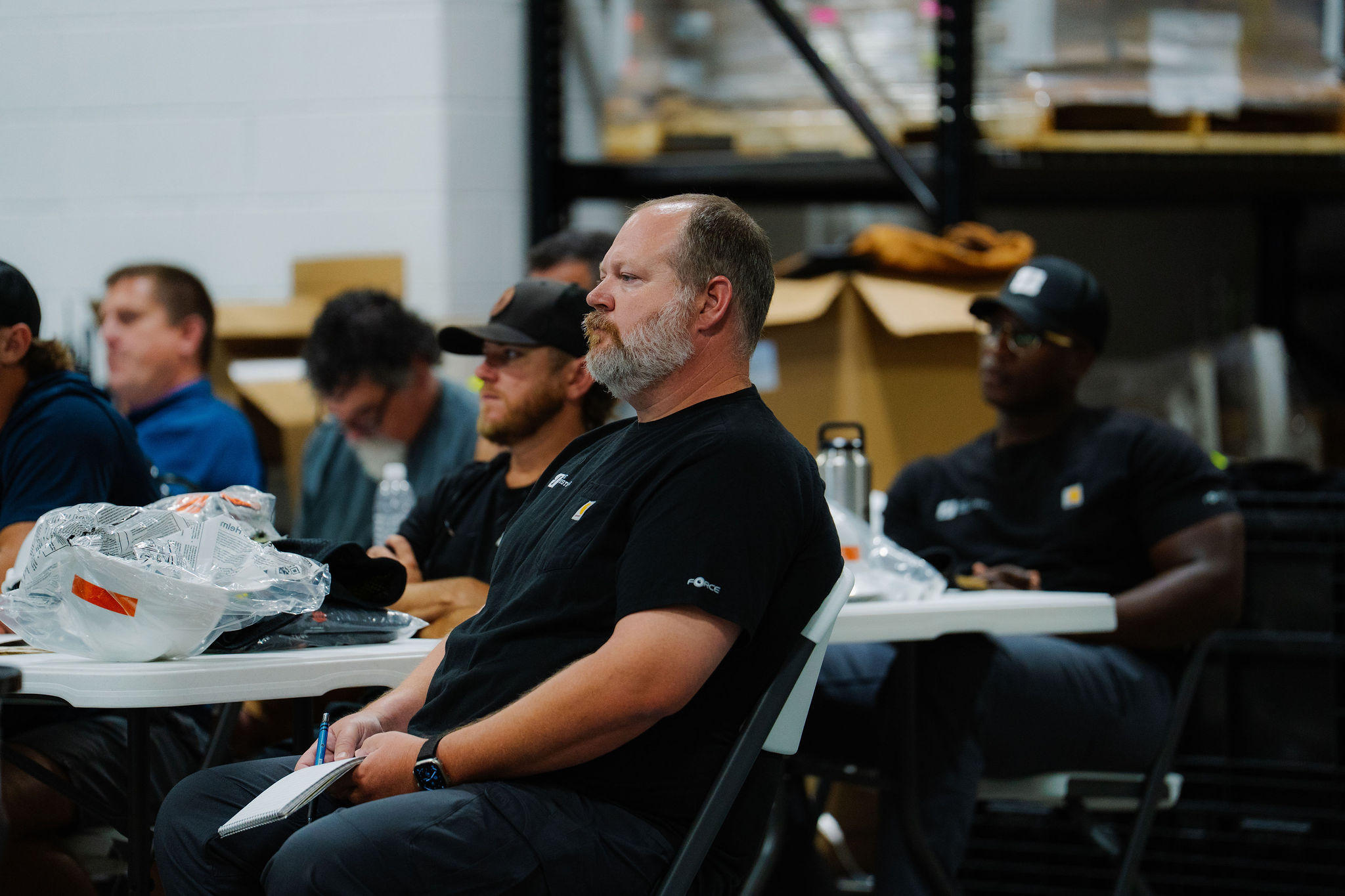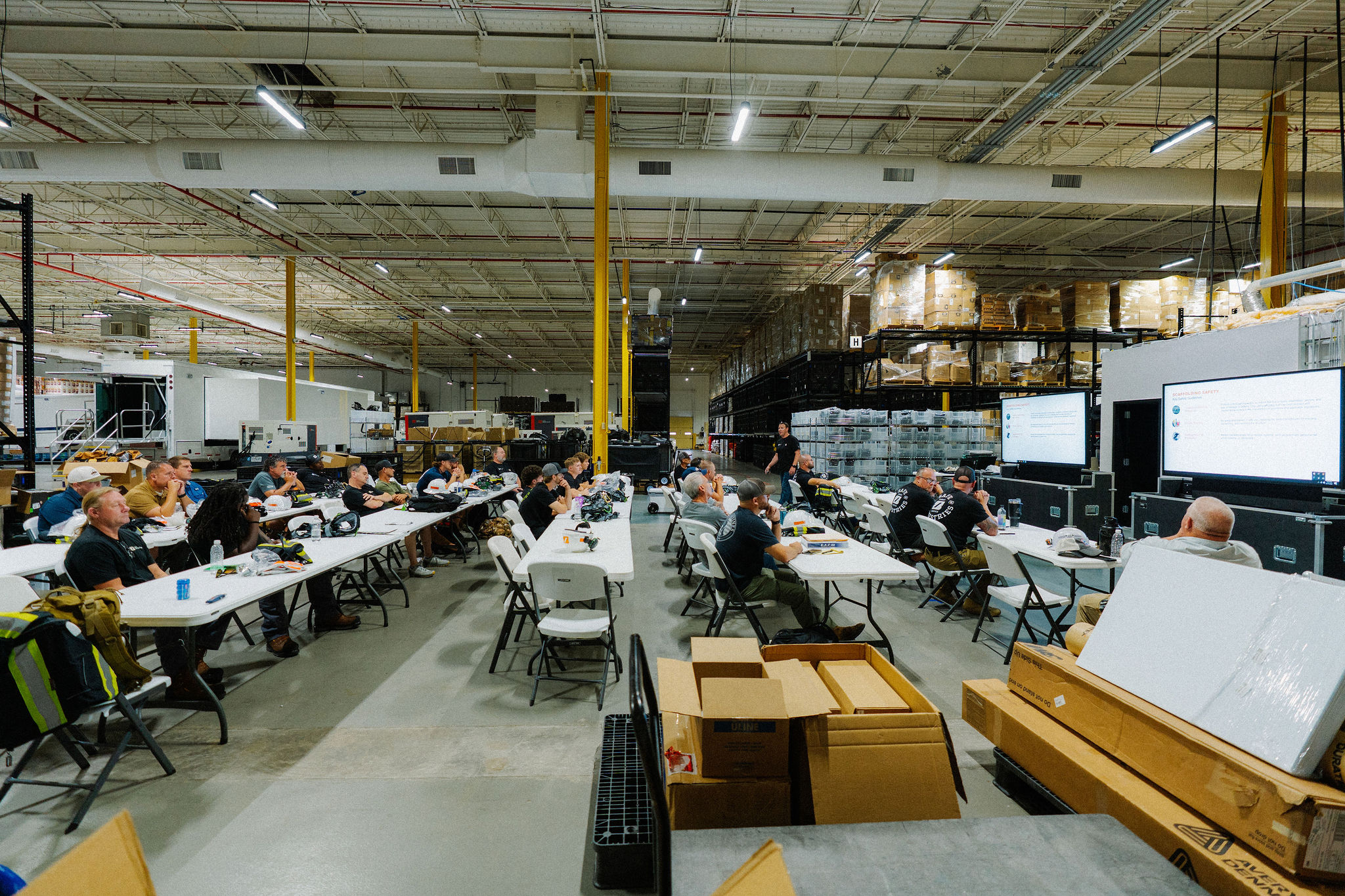
The work starts before the emergency does.
Most teams meet their response partner during the crisis. That is too late. We build margin and plan on the quiet days, so when the clock starts, the plan already exists.
Blue-sky days. And game day.
There are two kinds of days in this work. The quiet ones, where the real advantage is built. And the loud ones, where it pays off. We work both, on a clock measured in hours from notification.
Before the call.
Planning, margin, and readiness while there is still time to do it right. The work that makes game day survivable.
Sit down early
We learn your operation, your gaps, and your worst-case scenarios while there is time to plan.
Build the plan
We map what you have, what you would need, and where the holes are. A response plan, not a phone number.
Build margin
We position resources, line up vendors, and create slack in the system before you need it.
Stay ready
Plans go stale. We keep yours current, reviewed at least annually, so the work is already half done.
When the clock starts.
Mobilize, manage, and stay until the job is done. Timed from the moment you call.
You call
One number, day or night. You tell us what you are facing.
We mobilize
We pull from what we own and pre-positioned. Strike teams on site within 8 hours.
We manage it
Sourcing, quoting, contracts, logistics, setup. Fully operational within 18 to 24 hours.
We sustain
Full operations and daily reporting through demobilization. We answer for the result.
T+0 marks the moment the call comes in. Everything after is measured from there.
The teams that fare best already had a plan.
Anyone can show up after. The advantage is built before, on the quiet day nobody is thinking about the next disaster. That is the day to call us. Whether you are planning for next season or facing something right now, the conversation is the same first step.